Couple Hug Line Art SVG: A Designer's Review
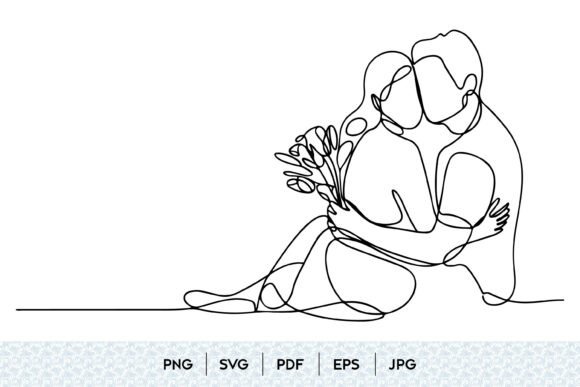
As a designer who has spent years translating digital files into tangible thread, I approach every new asset with a critical eye. When I first opened the Couple Hug Line Art SVG, my immediate reaction was to appreciate its simplicity. In a world often cluttered with over-stitched, dense designs, this piece of Illustrations stands out for its continuous line drawing style. It captures a romantic couple illustration in a way that feels both modern and timeless. However, before I commit to using it on a client order or stocking it in my small shop product line, I need to understand how this minimalist people illustration translates from screen to fabric.
The First Impression: Mood and Visual Personality
The visual personality of the Couple Hug Line Art SVG is undeniably soft and intimate. The continuous line technique creates a sense of flow that is rare in standard machine embroidery design files. Unlike complex fill stitch patterns that can weigh down a garment, this design relies on clean contours. For an Etsy seller or a boutique owner looking to create personalized gifts, this aesthetic is gold. It suggests elegance without shouting for attention. The mood is perfect for wedding gifts, anniversary keepsakes, or even nursery decor where a subtle touch of love is preferred over bold graphics.
However, the challenge with any continuous line drawing is how the thread will handle the curves. In the digital realm, the lines are smooth. On fabric, they become a series of tiny stitches. My concern is whether the running stitch or satin stitch settings will maintain that fluidity or if they will appear jagged on a finished product. This is where practical testing becomes non-negotiable.
Real-World Application: From Tote Bags to Sweatshirts
Let’s imagine a real-life scenario. I have a custom apparel order for a couple celebrating their fifth anniversary. They want a high-quality embroidered patch for a denim jacket or perhaps a sweatshirt embroidery project. The Couple Hug Line Art SVG seems like the ideal candidate. Its compact nature means it won't overwhelm the chest area of a hoodie. If I were to use this as a tote bag design, the continuous lines would stand out beautifully against canvas, provided the right stabilizer is used to prevent puckering.
For baby embroidery, this design offers a gentle alternative to loud cartoons. Imagine a onesie with this hugging couple svg stitched in soft pastel thread colors. It works as a sweet statement about family love. Similarly, for holiday embroidery projects, this could be a centerpiece on a pillow cover or a kitchen towel. The key here is the scale. Because the design is a minimalist people illustration, it needs enough room to breathe. Crowding it into a tiny hoop size would ruin the delicate balance of the lines.
When considering commercial embroidery for a craft business, the versatility of the file formats matters. The fact that you get SVG, PNG, EPS, JPG, and PDF means I can use the vector data for my embroidery software while also using the raster images for printable mockups. These mockups are essential for buyer engagement. A customer needs to see how the Couple Hug Line Art SVG looks on a dark fabric background versus a light one before they trust me with their money.
Navigating Fabric Texture and Stitch Density
Not all fabrics play nice with line art. If I attempt to stitch this on textured fabrics like heavy wool or ribbed knit, the continuous line might break visually. The thread needs a smooth surface to follow the curve of the couple. Stretchy fabric presents another hurdle; if the material stretches during hooping, the design could distort, turning the elegant hug into a lopsided shape. I always recommend checking the fabric texture before committing to a final run.
Stitch density is another critical factor. With a design this thin, there is very little margin for error. If the density is too high, the lines will thicken and lose their definition. If it is too low, the threads might not lock properly, leading to fraying after frequent washing. This is why I always test the design on scrap fabric first. I need to confirm that the satin stitch width is appropriate for the thickness of the lines in the Couple Hug Line Art SVG. Using a proper stabilizer is equally important to ensure the finished product maintains its integrity over time.
Where Caution Is Required
- Small Hoop Sizes: While the design is compact, shrinking it too much can cause the lines to merge. Check your minimum stitch length capabilities.
- Dark Fabric: Light thread on dark backgrounds requires careful color selection. Ensure the contrast is high enough for the details to pop.
- Curved Surfaces: Embroidering on caps or hats adds complexity. The curvature might distort the continuous line drawing, so test on a cap form first.
- Detailed Corners: Sharp turns in the line art can sometimes cause thread breaks if the machine speed is too fast.
- Frequent Washing: Items like aprons or tea towels undergo stress. Verify that the thread tension is secure to prevent unraveling.
Enhancing Product Value and Brand Consistency
Using a well-executed design like the Couple Hug Line Art SVG elevates the perceived value of a handmade product. Customers associate clean, professional stitching with quality craftsmanship. If the lines are crisp and the thread colors are chosen with intention, the item transitions from a simple craft to a collectible piece. This directly impacts customer trust and brand consistency for small shop owners.
For digital product sellers, offering this as part of a bundle of design assets makes sense. The inclusion of multiple file formats allows other creators to adapt the graphics for different uses, whether it's for an applique design or a standalone machine embroidery design. However, as a reviewer, I must remind everyone to confirm licensing before selling finished items. Just because you own the file doesn't always mean you have the rights to sell unlimited physical goods. Always read the terms.
Practical Notes for the Modern Maker
If you decide to move forward with this project, start by reviewing the stitch count and density in your digitizing software. Even though the source is an SVG, the way it is converted to an embroidery file matters immensely. Test it in black and white mockups to visualize the silhouette without the distraction of color. Compare how it looks on light and dark fabric backgrounds to determine the best thread palette.
Inspect small details closely. In a continuous line drawing, a single broken thread can disrupt the entire image. Use a high-quality thread and ensure your needle is sharp. Finally, consider the context. Does this romantic couple illustration fit the vibe of your specific brand? If you specialize in edgy streetwear, this might feel too soft. But for a brand focused on love, weddings, or family, the Couple Hug Line Art SVG is a powerful tool.
In conclusion, this asset holds significant potential for the creative entrepreneur willing to put in the technical work. It is not a "load and go" miracle, but rather a canvas for skilled execution. By respecting the nuances of fabric, stabilizer, and stitch type, you can turn this minimalist people illustration into a standout feature of your next embroidery project. Whether it ends up on a baby blanket, a wedding guest book, or a limited-edition sweatshirt, the emotional resonance of the design, combined with professional stitching, will deliver a result that customers will cherish.